


A garage door that won’t open can leave your car trapped inside or prevent you from accessing the garage.
The problem may be with the garage door opener, but a broken spring, an engaged lock, or damaged hardware can also prevent the door from opening. Forcing the door open without knowing what’s wrong could cause further damage or injury.
This guide covers the common reasons a garage door won’t open, what you can safely check yourself, and when to call a professional.
What Happens When You Try to Open the Garage Door?
Does the opener respond? Does the motor run without moving the door? Or does the door start to rise and then stop?
Here’s what these signs may mean and what to check next:
| What happens | Possible causes | What to check or do next |
|---|---|---|
| Nothing happens when you press the opener controls | No power, faulty controls, or opener failure | Check the power supply and wall control if accessible. |
| The wall control works, but the remote doesn’t | Weak battery, Lock Mode, programming, or signal interference problems | Try another remote and check the battery and lock setting. |
| The opener clicks or hums, but the garage door doesn’t move | Engaged lock, heavy or stuck door, or motor/electrical problem | Check for an engaged lock or visible damage. Note any diagnostic code and avoid repeated attempts. |
| The motor runs, but the garage door won’t open | Disconnected trolley, damaged drive components, or a stuck door | Check for a disconnected trolley, an engaged door lock, or visible damage. |
| The garage door opens a few inches, then stops | Broken spring, mechanical resistance, or opener fault | Note where it stops. Avoid repeated attempts to open it. |
| The door is crooked, jammed, or has a loose cable | Damaged or displaced hardware | Stop using the garage door and have a technician inspect it. |
| A manually operated door won’t lift | Engaged lock, spring problem, obstruction, or binding | Check whether the lock is engaged, but don’t force a heavy or stuck door. |
If you see a broken spring, loose cable, displaced roller, or other serious damage, leave the door where it is. Don’t operate it again or attempt to open it manually until a technician has inspected it.
If you’re locked outside and can’t get into the garage through another entrance, skip the checks that require access from inside. We’ll cover your options below.
When the Opener Doesn’t Respond
Check whether the opener has power and which controls still work. If you can safely access the garage, start with these checks:
- Power supply: Make sure the opener is plugged in and look for signs that it’s receiving power, such as an illuminated indicator or display. If the unit has no power, check for a power outage, a tripped circuit breaker, or a GFCI outlet that needs resetting.
- Wall control: If the opener has power, try the wall control. If it doesn’t respond, the button, wiring, or opener electronics may be faulty. Check for any diagnostic lights or error codes and refer to the owner’s manual for your model.
- Remotes and keypad: Test each available remote and the keypad separately. If only one remote fails, check its battery and programming. If the wall control works but none of the wireless controls do, check whether Lock or Vacation Mode is enabled on the wall control. Signal interference, an antenna problem, or a faulty receiver could also be causing the problem.
Keep in mind:
- If a breaker or GFCI trips repeatedly, stop resetting it and have an electrician check the problem.
- If the remote works only when you’re close to the garage, a weak battery, radio interference, or a receiver problem may be involved. See our guide to replacing a garage door remote battery.
When the Opener Responds
The opener may click or hum without starting, or the motor may run while the garage door stays closed. Here are some possible causes:
- Disconnected trolley: On most ceiling-mounted openers, the trolley connects the door to the opener’s drive mechanism. Wall-mounted openers use a different mechanism, but both types typically have a red emergency-release cord or handle. If the door hasn’t been reconnected after someone uses the emergency release, the opener can run without moving the garage door.
- Damaged drive components: Worn gears, a broken sprocket, or a damaged belt, chain, or screw-drive component can keep the opener from lifting the door. The motor may run or make a grinding noise while the drive mechanism fails to move properly.
- Door is locked, heavy, or stuck: An engaged lock, broken spring, damaged cable, or binding hardware can prevent the door from lifting even though the opener responds to the command. It may click, strain, or stop shortly after starting.
- Motor or electrical problems: If the opener clicks or hums but won’t run properly, the motor, capacitor, transformer, or another electrical component may be faulty.
When the Garage Door Won’t Lift or Stops Partway
There are several problems that can prevent the garage door from opening or cause it to stop partway.
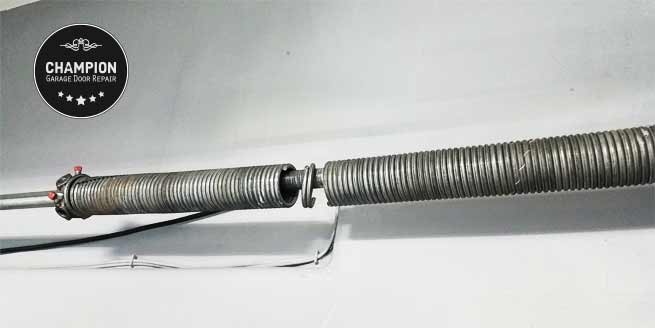
- Broken springs or incorrect spring tension: Springs counterbalance the garage door’s weight. If a spring breaks, the door may become too heavy to open or rise only a few inches. A visible gap in a torsion spring is a sign that it’s broken, but the break may be hidden in enclosed spring systems. Even with intact springs, an unbalanced door can be difficult to lift.
- Damaged lift cables or drums: A broken cable or one that has slipped off its drum can cause the door to tilt, jam, or stop partway.
- Tracks, rollers, hinges, or door sections: Bent tracks, damaged rollers, broken hinges, or distorted sections can prevent the garage door from moving properly. It may get stuck when a damaged part reaches a certain point along the tracks. An object in the door’s path or loose track hardware can also interfere with opening. Check for visible obstructions without touching or adjusting the track hardware.
- One-piece tilt-up doors: These doors lift as one panel using pivoting arms and springs. Bent pivot arms, damaged hinges, or failed spring components can keep the door from opening or cause it to get stuck.
- Locks and binding against the opening: An engaged manual lock or malfunctioning automatic lock can keep the garage door closed. The door may also stick against the jambs, header, or weatherstripping. Misaligned framing, swollen wood, or paint adhesion can contribute to this type of binding.
- Opener settings or movement-detection problems: If the opener stops the garage door too early, incorrect force or travel settings or a faulty movement-detection component may be responsible. If the opener displays a diagnostic code, note it and check the owner’s manual.
What to Do If the Garage Door Still Won’t Open
If you haven’t found the problem yet, your next step depends on whether the garage door can be opened safely.
- Can you open it manually? During a power outage or opener failure, you may be able to use the emergency release to disconnect the opener and lift the door by hand. Check whether your opener has a working battery backup first. Only use the emergency release when the door is fully closed and you have no reason to suspect damaged springs, cables, or other hardware. Don’t force the door if it’s heavy or stuck. See our guide on how to open and close a garage door manually for instructions.
- Locked outside the garage? Use a side entrance when available. Otherwise, if your garage door has an exterior emergency-release lock, you may be able to disconnect the opener from outside and open the door by hand, if it’s safe to do so. If neither option is available to you, call a professional.
- When to call a garage door company: If the garage door stays stuck, is unusually heavy, or has damaged hardware, have a technician from a licensed garage door company inspect it. Explain what happens when you try to open it, including any unusual sounds, visible damage, or opener error codes.
- When to call for emergency repair: If your garage door won’t open and your car is trapped inside, you may need to call for emergency service if you can’t wait for a scheduled repair. A crooked or off-track door, a broken cable, or other serious mechanical damage that compromises the door’s safety or security also needs prompt attention from a professional.
Need Help With a Garage Door That Won’t Open?
Champion Garage Door Repair provides same-day and emergency garage door repair throughout Orange County and South Los Angeles. Our technicians can check what’s preventing your garage door from opening, explain what’s going on, and complete most repairs during the same visit.
Call today or contact us online to schedule service.


