


An Orange County homeowner recently experienced a serious garage door failure that shows how quickly an off-track door can become a safety hazard. A modern full-view garage door came off its tracks, causing part of the door to strike a parked vehicle before the remaining sections collapsed onto the garage floor. Fortunately, no one was standing near or beneath the door when the failure occurred, and no injuries were reported.
An off-track garage door should never be treated as a minor inconvenience. Garage doors contain multiple mechanical components, including tracks, rollers, hinges, lift cables, cable drums, torsion springs, and other hardware. Each component performs a specific function to guide the door, support its weight, and maintain proper alignment throughout every opening and closing cycle. When one of these components fails, the entire system can become unstable and continued operation can increase the risk of property damage or personal injury.
This article explains what caused this particular garage door to become damaged and lose alignment, how the problem was safely repaired, and what homeowners should do if they discover their garage door is no longer operating properly.
While many service calls related to off-track doors are caused by a lift cable coming off the cable drum, this incident involved a less common mechanical failure that highlights the importance of identifying the underlying cause before the door is operated again.
What Was Found During the Inspection
When Champion arrived at the Orange County home, the first step was to determine why the full-view garage door had shifted out of its normal operating position. An off-track garage door is a visible symptom, but the underlying failure can originate from several different components. A technician must inspect the complete door system, including the tracks, rollers, hinges, lift cables, cable drums, and other supporting hardware, before attempting repairs.
In many cases, an off-track garage door occurs when a lift cable slips off the cable drum. The cable controls the movement of the door by maintaining even lifting force on both sides. When a cable comes loose, the side of the door that remains supported can rise while the opposite side drops, causing the door sections to hang unevenly and appear tilted or misaligned.
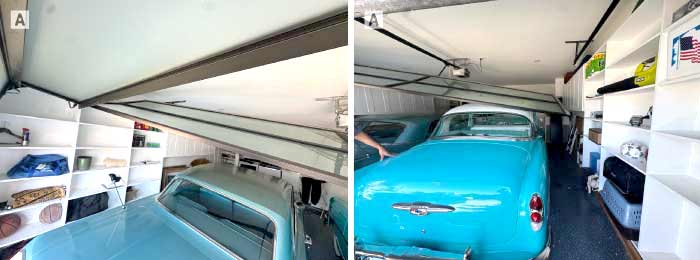
This service call however involved a different type of failure. During the inspection, the damaged area was traced to a broken hinge that connected two sections of the full-view garage door. The failed hinge allowed the door sections to separate and reduced the structural support between connected sections. Once the door sections could no longer maintain a secure connection, the weight shifted and caused them to move out of their intended path.
A Broken Hinge Can Cause a Garage Door to Come Off Track
Garage door hinges do more than connect individual sections together. They allow the door sections to bend as the door moves from the vertical tracks into the horizontal tracks during opening. The hinges also help keep the rollers positioned correctly so each section follows the intended path through the track system.
When a hinge breaks, the connection between the door sections is compromised, and the sections may no longer move as one stable assembly. The failed hinge can allow the connected sections to separate, shift, or place additional stress on nearby rollers, brackets, and track components. As the door moves, the misaligned section can force the rollers out of their normal position, causing part of the door to move outside the track system.
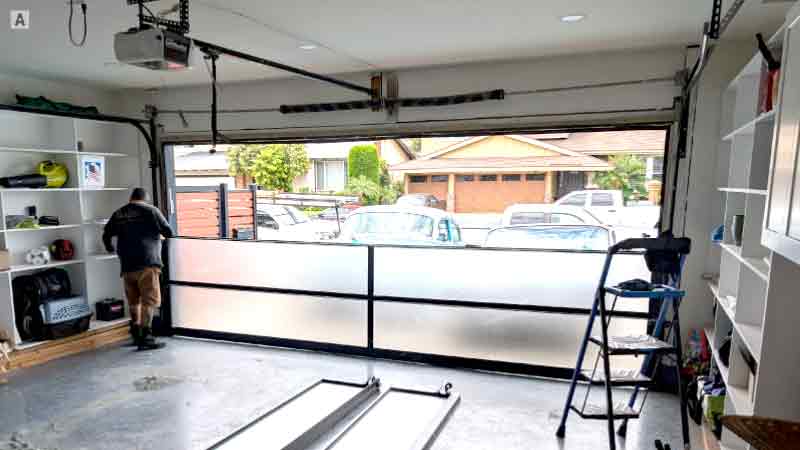
In this Orange County service call, the broken hinge affected the relationship between two door sections. The separation changed how the door distributed its weight during movement, causing the sections to shift and eventually move away from their intended path through the tracks.
Off-Track Garage Door Creates Risks
A garage door that has moved outside its track system can become unstable because the components that normally control its movement are no longer working together correctly. When one part fails or shifts out of position, other components may experience forces they were not designed to handle, and the door may no longer operate within safe mechanical limits.
A full-view garage door can create additional safety concerns because the door sections contain large glass panels that can crack or break when the structure twists, impacts an object, or falls unexpectedly. A damaged panel, loose hardware, or separated section can create sharp edges and additional hazards.
Homeowners should also remember that a garage door spring system stores significant mechanical energy. Even when a door is stuck or off the tracks, torsion springs and lift cables may still be under tension. Attempting to force the door open, pull it back into position, or remove hardware without proper tools, training, and knowledge of the system increases the risk of injury.
An off-track garage door is also a security concern. A door that cannot close completely may leave the garage, belongings, and access points into the home exposed.
What Homeowners Should Do When a Garage Door Comes Off the Tracks
When a garage door comes off the tracks, homeowners should take immediate steps to keep people safe and prevent the situation from becoming more complicated.
- Stop operating the garage door. Do not press the wall button, use the remote opener, or attempt to move the door manually. Operating a broken door that has lost alignment can cause the problem to become more severe and make the repair process more difficult.
- Keep people, pets, and vehicles away. A door that appears stable can move suddenly when components change position or when one side of the door loses support while the other side remains supported.
- Do not force the door back onto the tracks. Garage doors are counterbalanced systems, and the springs, cables, and other parts are designed to balance and control the door’s weight during normal operation. Moving a damaged door without knowing how the system works can make the problem worse or create a dangerous situation.
- Secure the garage area while waiting for service. If the garage door cannot close fully, remove valuables from exposed areas when possible and avoid leaving the garage accessible until the door has been repaired.
- Contact a licensed garage door repair company. A garage door is a large, heavy mechanical system that requires proper training to repair safely and in accordance with industry practices and manufacturer specifications. Before providing personal information or scheduling service, take a moment to verify the company’s license through the CSLB or the appropriate licensing authority in your area.
- Prepare the garage area for service. The technician will need clear access around the garage door to inspect and repair the system. If the garage is used for storage, homeowners should move items away from the work area.
More Than Getting a Garage Door Back on Track
Due to the size and weight of full-view aluminum garage doors and the condition of the damaged system, Champion Garage Door sent a crew equipped to handle the repair. The service team began by securing the area and inspecting the system before initiating repairs.
An off-track garage door can result from different mechanical failures. A damaged garage door requires more than repositioning the visible components. The repair process starts with identifying the failed hardware that caused the system to lose alignment.
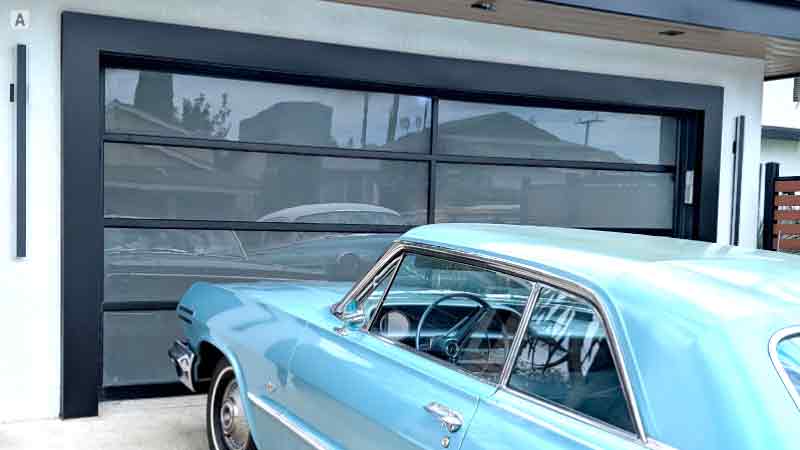
The repair required carefully repositioning the door sections, removing damaged hardware, and replacing the failed hinge component. The crew also aligned the tracks and inspected the surrounding door components to verify that the original failure had not caused additional problems.
After the repair was completed, the garage door was tested, including a balance check. The technician verified that the door sections aligned correctly, the rollers traveled properly through the tracks, and the safety components functioned as intended.
Before Your Garage Door Leaves the Tracks
A garage door that comes off the tracks is often the result of a developing hardware problem, an operating issue, or damage to one of the components that guides and supports the door. Homeowners can reduce the chance of an off-track failure by paying attention to how the door operates and practicing proper prevention.
- Keep items away from the garage door area. Boxes, tools, bicycles, and stored items should remain clear of the tracks and door path. Objects that get caught in the doorway can interfere with the door’s movement, which may cause the cable to come off the drum and potentially damage the door sections.
- Check the door balance and cables periodically. A door that appears uneven, feels unusually heavy, makes unusual sounds or does not move smoothly may indicate a problem with the spring and cable system. Do not ignore these warning signs as they can indicate a developing mechanical problem.
- Inspect the safety systems regularly. Test the garage door opener’s safety sensors and verify that the door responds correctly when the safety system is activated. Properly functioning safety sensors help prevent the opener from closing when an obstruction is detected.
- Schedule a professional garage door inspection once a year. A yearly inspection and maintenance allows a technician to check the door system for wear, damage, or alignment issues before they interfere with safe and consistent operation.
Small changes in how a garage door sounds, moves, or operates can provide early warning that service may be needed. Regular attention to these signs and professional inspections can help homeowners address issues before they interrupt normal operation.


