


In October 2026, high surf and exceptionally high tides flooded coastal neighborhoods in Orange County and Long Beach, causing closures along Pacific Coast Highway and sending water into low-lying properties. For some homeowners, the problems didn’t end when the water receded.
After the flooding, Champion Garage Door Repair received service calls from Sunset Beach, Seal Beach, Newport Beach, and Long Beach.
Our technicians found defective safety sensors, faulty wiring, and a failed opener circuit board. One customer had the entire opener replaced, while others asked us to inspect bottom seals and trim moldings.
Floodwater can damage more than a garage door’s electrical components, and some of that damage may not become apparent until later.
This article examines the October 2026 flooding, the potential effects on different garage door materials, and what homeowners should check before using a garage door that has come into contact with floodwater.
What Happened During the October 2026 Coastal Flooding?
The month brought two notable periods of coastal flooding. On October 9, Newport Beach declared a local emergency after high surf and elevated ocean levels flooded streets along the Balboa Peninsula the evening before.
The early-October flooding was associated with Tropical Storm Rachel. Another round of unusually high tides occurred from October 26–29, affecting coastal communities in Orange County and Long Beach.
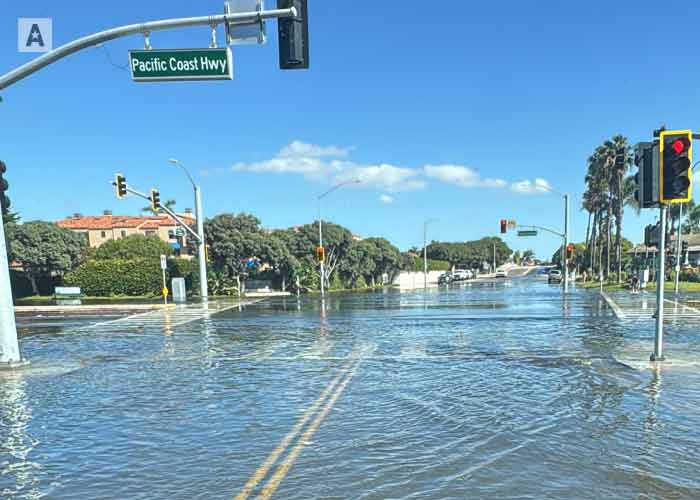
Huntington Beach declared a local emergency on October 26 as flooding reached Sunset Beach and Huntington Harbour. Water entered residential streets and homes, particularly around Bayview Drive, North Pacific Avenue, and Park Avenue.
On October 27, flooding forced closures along Pacific Coast Highway, including both directions between Warner Avenue and Seal Beach Boulevard and northbound lanes between Seapoint Street and Warner Avenue.
Flooding returned to the Balboa Peninsula and Newport Harbor. Parts of Long Beach, including Naples and the Peninsula, were also affected.
The late-October flooding was driven mainly by exceptionally high tides, while the earlier episode also involved storm-related surf. High tides can send seawater into low-lying streets and harbor neighborhoods and cause water to back up through drainage systems.
Garage Door Problems and Repairs Following the Coastal Floods
Not every homeowner who contacted Champion after the October flooding had a visibly damaged garage door. Some were having trouble with electrical components, while others wanted to have their bottom seals and trim moldings checked.
During a service call in Huntington Beach, our technicians found defective safety sensors and faulty wiring that required replacement. Safety sensors are an important part of the garage door opener’s safety system under UL 325. When the sensors or their wiring aren’t working properly, the opener can prevent the door from closing normally.
The technician replaced the safety sensors and sensor wiring, then reprogrammed the garage door opener. The repair took 60–90 minutes and cost $475.
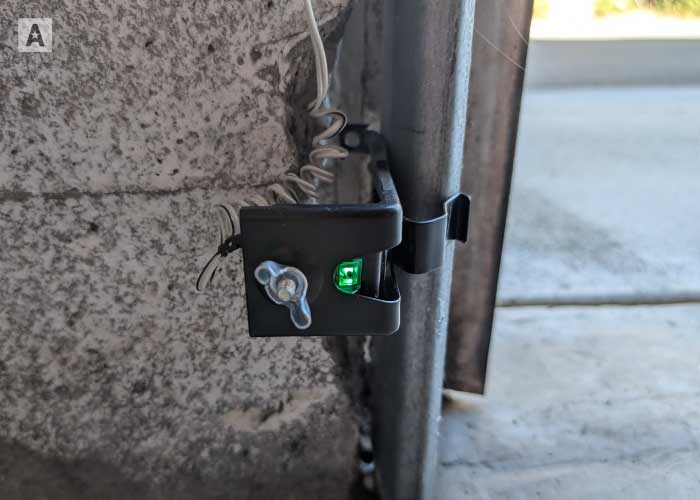
Our technicians also found a garage door opener in Newport Beach with a failed circuit board and defective safety sensors. The customer decided to replace the entire opener because repairing both problems would have cost nearly as much as buying a new one.
The technician installed a new smart Wi-Fi opener with battery backup, rail, safety sensors, wiring, a wall button, and two remotes. He also programmed the opener to work with the customer’s vehicles. The replacement took about two hours and cost $978.
A homeowner in Seal Beach reported excessive water entering the garage during the king tide flooding. The technician found that a cable issue had left one side of the garage door higher than the other, creating a gap under the door.
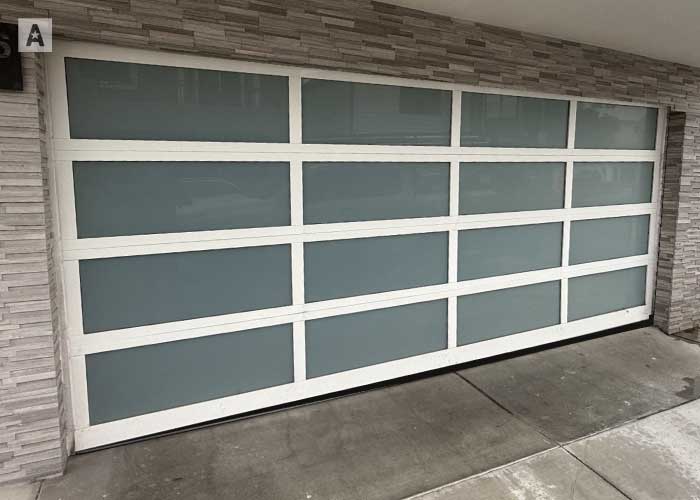
It was a full-view aluminum garage door equipped with four custom springs. The technician reset the torsion system, drums and cables. He then aligned, balanced and lubricated the door and reprogrammed the opener. The repair took 60–75 minutes and cost $525.
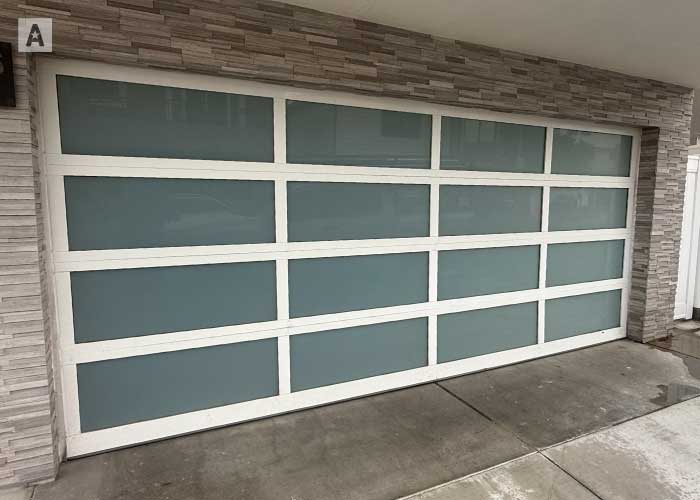
In Huntington Harbour, a customer reported water entering through the side of his custom wood garage door. The technician found worn trim molding on the garage frame. He replaced it with vinyl trim molding around the frame. The repair took 50 minutes and cost $495.
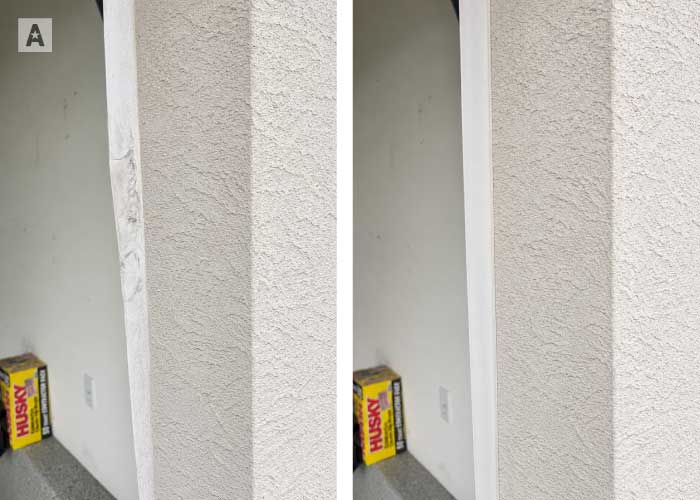
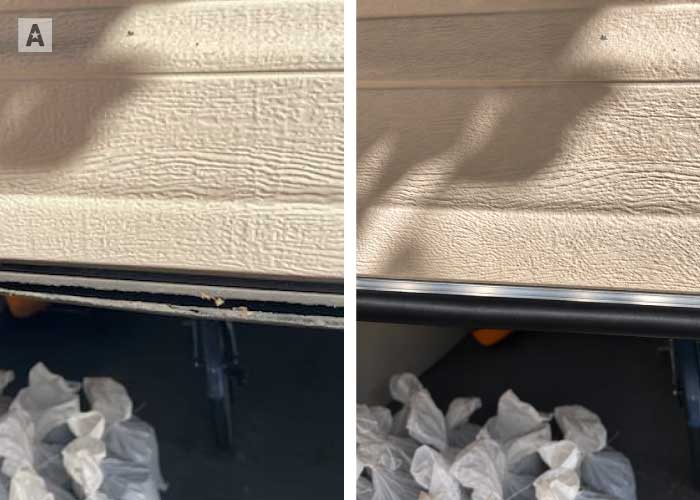
In Long Beach, a homeowner requested an inspection of the bottom seals and trim moldings. Our technician adjusted the trim molding and tracks, replaced the bottom seal, and installed a new rust-resistant aluminum retainer. The work took about 60–75 minutes and cost $645.
What Should Homeowners Check Before Using a Garage Door After a Flood?
Even if the garage door looks fine after the flooding, its electrical or mechanical parts may have been damaged. Before you try to open or close it, here’s what to check.
- Make sure the garage is safe to enter. If there’s still standing water in the garage or electrical equipment may have been underwater, don’t enter the garage until a qualified professional has checked for electrical hazards. Do not touch electrical switches, outlets, or breakers while standing on a wet surface.
- Don’t test electrical equipment that got wet. Don’t operate the garage door if its safety sensors, wiring, or opener components may have been flooded. Electrical equipment can still be unsafe even after it dries.
- Look for visible damage without moving the door. From a safe distance, check for bent tracks, crooked panels, loose cables, damaged hardware, and debris around the garage door. Don’t attempt to lift an unstable door or pull its emergency release.
- Record signs of flooding. Take photos of visible waterlines, sediment, damaged sections, and affected components. If you know, write down how high the water reached, how long it remained, and whether seawater or contaminated runoff was involved.
- Have the door inspected if floodwater reached its components. A garage door technician can check the garage door’s mechanical parts and opener equipment for water damage. Any building wiring, outlets, or other household electrical equipment that got wet should be checked by a qualified electrician before being used again.
How Does Floodwater Depth Affect a Garage Door?
The height of the floodwater is one of the first factors to consider when assessing possible garage door damage. Even a couple of inches of water can reach the bottom section of the door and its hardware, while deeper flooding may affect additional sections and electrical components.
The table below shows which parts may have been exposed at different water levels.
| Floodwater Level | Garage Door Components Potentially Affected |
|---|---|
| Water reaching the bottom of the door | Bottom weather seal, retainer, lower panel edges, lower part of the tracks, bottom brackets, and cable loops |
| Water reaching the safety sensors | Photoelectric sensors and wiring connections. If water gets inside, it can cause electrical shorts, stop the door from closing, or possibly damage the opener’s circuit board. |
| Water reaching multiple door sections | Panel joints, hinges, rollers, insulation, and glazing if submerged |
| Water reaching higher-mounted equipment | Wall controls, opener components, and other electrical or mechanical equipment reached by the water |
Water depth isn’t the only concern. How long the water stayed in contact with the door, whether it carried sediment or debris, and whether it was seawater can affect the type and extent of damage.
Seawater is more concerning because it can leave salt deposits on metal surfaces and inside electrical connections after the water dries. Moving floodwater can also carry debris that damages panels or hardware.
Start by checking the parts the floodwater reached. Their condition will help determine whether they need repair or replacement.
How Can Floodwater Damage Garage Door Sensors, Wiring, and Openers?
Obvious areas of concern when a garage door has been in a flood are the lower parts of the system.
Safety Sensors and Wiring
Garage door safety sensors are installed close to the floor, making them vulnerable to flood damage. Water entering a sensor housing or reaching a wiring connection can cause a short circuit or interrupt the signal to the opener. In coastal areas, saltwater can also leave deposits that eventually cause corrosion.
When the sensors stop working, the opener may no longer close the door and stop functioning as intended. Some LiftMaster, Chamberlain, and Craftsman models display diagnostic codes 1-1, 1-2, or 1-4 when there’s a problem with the sensor wiring, a defective sensor, or an obstruction or misalignment.
Opener Circuit Boards and Electronics
Most garage door openers sit well above the floor, but floodwater doesn’t have to reach them to cause problems with their operation.
The unit’s circuit board is connected to safety sensors and wiring near the floor. A short circuit in these lower components can disrupt the opener’s operation and, under certain conditions, may also damage the circuit board.
When the circuit board fails, the opener may stop responding to remotes or the wall control, work intermittently, or fail to respond to programming attempts. In some cases, it may stop working altogether, even when it has power. Some LiftMaster, Chamberlain, and Craftsman models may display error codes 2-1 through 2-5, which indicate a circuit-board problem.
What Happens to Different Garage Door Materials After Flooding?
Floodwater can affect more than just the visible surface of a garage door. Different materials also react differently to water, and the longer they stay wet, the more damage they may suffer.
Wood Garage Doors
When wood absorbs floodwater, it can swell, get heavier, and change shape. As the wood dries, it may warp or crack, and small gaps can form between the pieces of wood that make up each door section. Swelling and warping can also affect how the door sections line up and move.
Wood garage doors made with veneers, laminated components, or decorative overlays may start to separate if floodwater weakens the adhesives holding them together. Wood that stays damp for too long can also develop mold or rot, especially where the finish has worn away or moisture gets trapped. Mold growth may also produce a musty smell.
If the floodwater came from the ocean, salt deposits can be left behind on the door’s surface and around joints and embedded metal fasteners, even after the floodwater has drained away. These deposits can cause metal parts to corrode.
Steel Garage Doors
Steel garage doors generally have protective paint or other finishes, and many use galvanized hardware. However, floodwater can reach areas that normally stay dry, such as the inside of the bottom section, folded panel edges, seams, and hardware connections.
Saltwater can cause corrosion when it reaches bare metal or areas where protective finishes have been scratched or worn away. Rust may first appear around fasteners, panel joints, or the lower edges of the door.
Insulated steel doors can have problems that aren’t immediately visible. Water may enter through seams or edges and get trapped between the steel layers or around the insulation. Trapped moisture can cause corrosion inside the door, even when the outside looks fine.
Aluminum and Glass Full-View Garage Doors
Aluminum doesn’t rust the way steel does, but it can still corrode. When exposed to seawater, aluminum can develop small pits on its surface, especially where protective coatings are damaged. Corrosion may also develop beneath the finish or inside joints where moisture gets trapped.
Steel fasteners and other hardware attached to aluminum framing can also cause problems. When uncoated steel and aluminum are in direct contact and saltwater reaches the connection, galvanic corrosion can develop on the aluminum around the contact points.
Surface corrosion may only affect the door’s appearance, but more serious damage around joints and attachment points can weaken those connections and potentially compromise the door’s structural integrity.
On full-view garage doors, the glass itself generally holds up well against water, but the surrounding glazing seals and frames may be affected. Moving floodwater and debris can also damage the glass or frame.
On doors with insulated glass, water trapped around the glass edges for an extended period can damage the seals. If a sealed glass unit fails, condensation or fogging may develop between its panes. Laminated glass can also begin to deteriorate around the edges if it stays wet for too long.
Can a Flood-Damaged Garage Door Be Repaired, or Does It Need Replacement?
An on-site inspection can help determine whether a garage door should be repaired or replaced after flooding. The examples below can give you an idea of what repairs may be needed.
| What the Inspection Finds | Possible Repair or Replacement |
|---|---|
| Damaged bottom seals or trim moldings | Adjust or replace the weatherstripping or trim if the garage door and framing are in good condition |
| Defective safety sensors or wiring | Replace damaged electrical components and verify that the opener’s safety system operates properly |
| Failed opener circuit board | Determine whether replacing the circuit board is practical or whether a complete opener replacement offers better value |
| Swollen, warped, or corroded door sections | Repair or replace individual sections if the garage door is sound and compatible replacement sections are available |
| Corroded or damaged tracks, brackets, and other hardware | Replace damaged or corroded components as needed, and check the door’s alignment, balance, and operation |
| Damaged aluminum framing or glass | Evaluate whether individual glass panels, glazing components, or door sections can be replaced |
Replacing a damaged section may not make sense if other sections or multiple parts have also deteriorated. The same applies to an older opener when the cost of repairs is nearly as much as installing a new one.
Photographs can help document the damage, while an itemized estimate provides a record of the proposed repairs and costs, especially if you’re filing an insurance claim.
Can Garage Door Seals Keep Floodwater Out?
Garage door seals aren’t designed to hold back rising floodwater. They can help keep rainwater from getting through gaps around the door, but they offer little protection against serious flooding.
Worn, cracked, or loose weatherstripping can let even ordinary rainwater inside. Adjusting or replacing the seals can improve how well the door seals against the surrounding frame and concrete floor.
An uneven garage floor, a driveway that slopes toward the garage, or poor drainage can cause water to collect against the door. In these situations, a garage floor threshold may help keep rainwater from getting inside during ordinary rainfall.
For homes in low-lying coastal areas, drainage improvements, flood barriers, or sandbags may also help limit floodwater entering the garage. The appropriate measures depend on where the water is coming from and how high it rises.
Garage Door Problems After Coastal Flooding?
Champion Garage Door Repair serves homeowners in Huntington Beach, Sunset Beach, Seal Beach, Long Beach, Newport Beach, and surrounding communities. If your garage door was damaged by flooding or isn’t working properly, contact us to schedule an inspection and find out what repairs may be needed.


