


Lubricating a garage door is a small job with a surprisingly wide spray radius. One careless pass can coat the track, spot the door, and leave dust clinging where lubricant never belonged.
Done precisely, the same task can quiet dry contact points and provide a useful before-and-after test. If your garage door has become noisy or developed a persistent squeak, this guide explains how to lubricate each component without assuming every moving part needs lubricant or every noise can be fixed with another spray.
What Garage Door Lubrication Can and Cannot Fix
A squeak can disappear with a small amount of lubricant, but a grinding noise, crooked movement, or a door that stops halfway can tell a different story. Before reaching for the lubricant, it helps to know which problem you are trying to solve.
Garage door lubrication reduces friction where metal parts pivot, rotate, or move against one another. Applied to the correct locations, it can help dry hinge pins, accessible roller bearings, and other moving parts designed to be lubricated operate more quietly. It can also help protect exposed metal from corrosion while reducing wear.
Lubricant cannot repair a cracked roller, worn bearing, loose hinge, bent track, damaged spring, frayed cable, unbalanced door, or failing opener component. It may briefly soften the sound without correcting its cause. If the door jerks, binds, hangs unevenly, feels heavy, or produces grinding, scraping, repeated popping, or banging sounds, have it evaluated by a professional garage door repair company instead of simply applying more lubricant.
Do not begin if the door cannot close fully, hangs crooked, is partly off its tracks, or has a broken spring or loose cable.
Listen Before You Lubricate
Run the garage door through one complete opening and closing cycle before applying lubricant. Listen for where the sound begins and whether it occurs while opening, closing, or in both directions. Also note whether the noise follows the moving door or comes from the opener’s motor head and rail.
A short squeak at one hinge suggests a different problem from grinding that follows a roller along the track or rattling that comes from above the door. Recording the location, sound, and point in the cycle gives you a baseline for assessing whether lubrication actually changed anything.
Check the Door and Opener Instructions
Garage doors do not all use the same rollers, spring systems, bearings, or opener drives. Treat the door and opener as separate systems. Before applying lubricant, check the door and opener manuals for lubrication points and maintenance intervals. The manuals may also identify sealed components that do not require lubrication. If you don’t have the manuals, follow the general instructions below for common garage door systems, but do not lubricate an unidentified part or any opener component without specific instructions.
What You Need to Lubricate a Garage Door
Gather the following items before you begin:
- A lubricant suitable for the component you are servicing, using the options compared below. A straw nozzle allows more precise application
- Clean, lint-free cloths for wiping dirt, drips, and excess lubricant
- A soft brush or vacuum attachment for removing dust and debris
- A piece of cardboard to protect the door, wall, and surrounding surfaces from overspray
- Safety glasses and gloves
- A stable stepladder if lubrication points cannot be reached safely from the floor
Which Garage Door Lubricant Should You Use?
Common garage door lubricants include petroleum-based spray lubricants, silicone spray, white lithium spray grease, and light machine oil.
Petroleum-based aerosol lubricants can enter small gaps and leave an oil film after the carrier evaporates, although the thickness and durability of that film vary by product. Silicone spray spreads easily and leaves a light coating. White lithium spray grease leaves a thicker coating but can collect dirt when overapplied. Light machine oil flows into small pivot points and bearings but can drip.
Do not use a rust remover or degreaser as a lubricant. Penetrating product specifications vary, so check whether the product is also intended to leave a lubricating film. WD-40 Multi-Use Product does provide lubrication, but it is also formulated to penetrate stuck parts and displace moisture. WD-40 also sells specialty lubricants, so check the specific product rather than the brand name.
Use only a small amount each time. Too much lubricant does not improve the result and can hold dust, leave oily marks, or drip onto the garage floor.
Prepare the Garage Door Before Applying Lubricant
Fully close the garage door, then unplug the opener so it cannot be activated while you work. Remove vehicles from the garage, keep children and pets away, and clear enough space to reach the door hardware without leaning over stored items.
Use a soft brush, vacuum attachment, or clean cloth to remove dust, cobwebs, and loose debris from the hinges, roller bearings, and other accessible lubrication points. Wipe away old buildup before adding fresh lubricant. Place a piece of cardboard behind each part as you work to catch overspray and protect the door, walls, and nearby surfaces.
Clean any lubricant from the garage floor immediately so it does not create a slipping hazard or leave a stain. Use a cleaning method compatible with the floor coating.
What Parts of a Garage Door Should You Lubricate?
Depending on the door system and design, common lubrication points include:
- Metal hinge pivot points on sectional doors
- Accessible, unsealed roller bearings
- Exposed torsion or extension spring coils
- Accessible, unsealed end, center, or pulley bearings
- Metal pivot points on manual locks and latches
- Accessible lift-arm pivot points on one-piece tilt-up doors
- Opener components identified as lubrication points in the model instructions
Do not apply lubricant to:
- The inside of the tracks
- Nylon roller wheels and plastic parts not identified as lubrication points
- Sealed bearings
- Safety sensors or door panels
- Cables, drums, spring cones, or attachment points unless the door manufacturer specifically instructs you to
- Opener belts
- Opener chains, rails, screws, or trolleys unless the opener manual specifies the product and application point
How to Lubricate a Garage Door
Hinges and Pivot Points
Apply a small amount of lubricant where each metal hinge pivots as the door moves. Use the straw nozzle when available to direct the lubricant into the joint rather than coating the entire hinge or door panel.
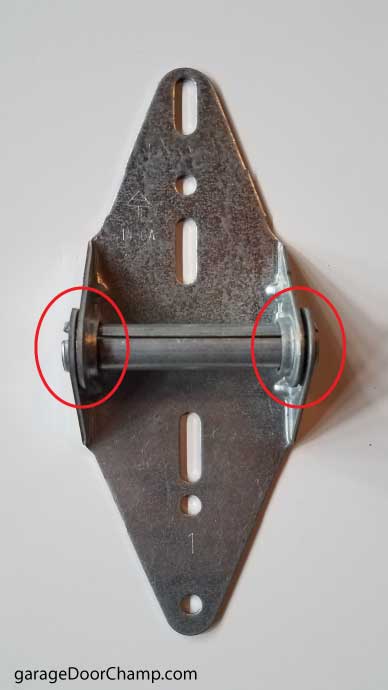
Wipe away drips and excess lubricant before moving to the next hinge. Do not loosen hinge screws or remove a hinge to reach the pivot point.
Roller Bearings
Apply a small amount of lubricant to the accessible bearing where the roller wheel rotates around its stem. Direct the straw toward the bearing opening without spraying the track or coating the wheel.
Do not lubricate sealed bearings. If a roller is cracked, wobbling, seized, or grinding after lubrication, it may be worn and require replacement. Do not remove the roller or loosen its bracket as part of this procedure.
Garage Door Springs
Unless the door manufacturer specifies otherwise, apply a light, even coating along exposed metal spring coils. On torsion springs, keep lubricant off the winding cones, set screws, cable drums, and nearby cables. On extension springs, keep it off the hooks, anchors, and safety cables. If a popping sound has been traced to dry coil contact, a light application may reduce it.
Do not lubricate a spring that is broken, separated, or otherwise damaged. Stop and arrange professional service instead.
Extension-Spring Pulleys
Apply a small amount to accessible, unsealed pulley bearings. Direct the lubricant toward the bearing or axle, not into the groove where the cable rides. Do not spray lift cables, safety cables, or attachment points.
End and Center Bearings
Most torsion-spring systems have end bearings near the cable drums and a center bearing or bushing at the spring anchor bracket. Apply a small amount only to accessible, unsealed bearings designed to be lubricated. Do not lubricate a center bushing unless it has an exposed lubrication point. Keep the spray off the drums, cables, and bearing plates.
Rear-Torsion Pulley Bearings
Rear-torsion systems may use separate pulleys to redirect the lift cables. Apply a small amount only to an accessible, unsealed pulley bearing or axle. Keep lubricant out of the pulley groove and off the cable.
Manual Locks and Latches
If the door has a manual slide lock or latch, apply a small amount of lubricant to its metal pivot points and moving joints.
Do not spray a keyed lock cylinder unless the lock manufacturer recommends the product. Lock cylinders may require a dry lubricant instead of the lubricant used on the garage door hardware.
Garage Door Opener Components
Check the opener manual before lubricating the rail, trolley, chain, screw drive, or other drive components. Some garage door openers require a specific grease or oil at a particular location, while others should not be lubricated.
Wall-mounted openers do not use a conventional overhead rail and trolley. Leave their internal drive components untreated unless otherwise specified by the manufacturer.
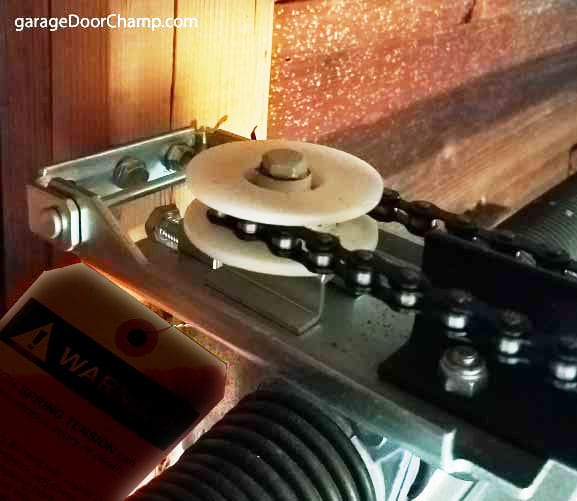
Do not apply garage door lubricant to an opener belt or spray the motor housing, electrical connections, safety sensors, or logic board. If the manual does not provide lubrication instructions, leave the opener components untreated.
One-Piece Tilt-Up Garage Doors
A one-piece tilt-up door moves as a single panel, so it does not have the row of hinges found on a sectional garage door. Apply a small amount of lubricant to accessible metal pivot points on the lifting arms without moving or adjusting the hardware.
Follow the spring instructions above for exposed spring coils. Do not spray spring anchors. If reaching a lubrication point requires moving a spring, lifting arm, or supporting bracket, leave it untreated and arrange professional service.
Test the Garage Door After Lubrication
Reconnect the opener once you’re done. Operate the door through one complete opening and closing cycle, then compare the sound with what you recorded before lubricating.
If the door moves smoothly and the original noise is quieter or gone, no additional lubricant is needed. If the sound is reduced but remains, apply one additional small amount to the point most likely producing the noise, then test the door once more.
If the noise remains after the second test, or lubrication made no difference from the beginning, stop applying more. Wear, damage, misalignment, or another problem may be causing noise that lubrication cannot fix. Use our guide to garage door noises and what they mean to narrow down the possible source and decide what to do next.
How Often Should You Lubricate a Garage Door?
Follow the maintenance interval in the door and opener manuals when available. If no interval is provided, checking common lubrication points about every six months is a practical starting point, but lubricant does not need to be reapplied when the parts remain lubricated and move quietly.
Doors used several times each day or exposed to coastal moisture, dust, or temperature extremes may need to be checked more often. Reapply lubricant where a component appears dry or begins squeaking, and clean away old buildup rather than layering fresh lubricant over dirt.


Thanks for mention that part about the miscellaneous pieces. I checked the hinges and the wheel that the chain goes around, but I think it just might be something else. At the very least, that darn squeaking still goes on after I have lubricated everything. Thanks for the tips. It did help! I never realized how dirty some parts were in my garage door opener!
Reading this article has shown me just how many different working parts there are with garage doors. This doesn’t sound like something a regular homeowner like me would be able to fix all by myself since I might lack the tools.
One side cable spool sqeals when door is about two panels from being totally open. Its a new door, no binding anywhere. Lubed, lubed, lubed…?????
Hello Trevor, the noise could be coming from the pulley grinding against the end bearing plate, misaligned end bearing plate, or worn bearing.